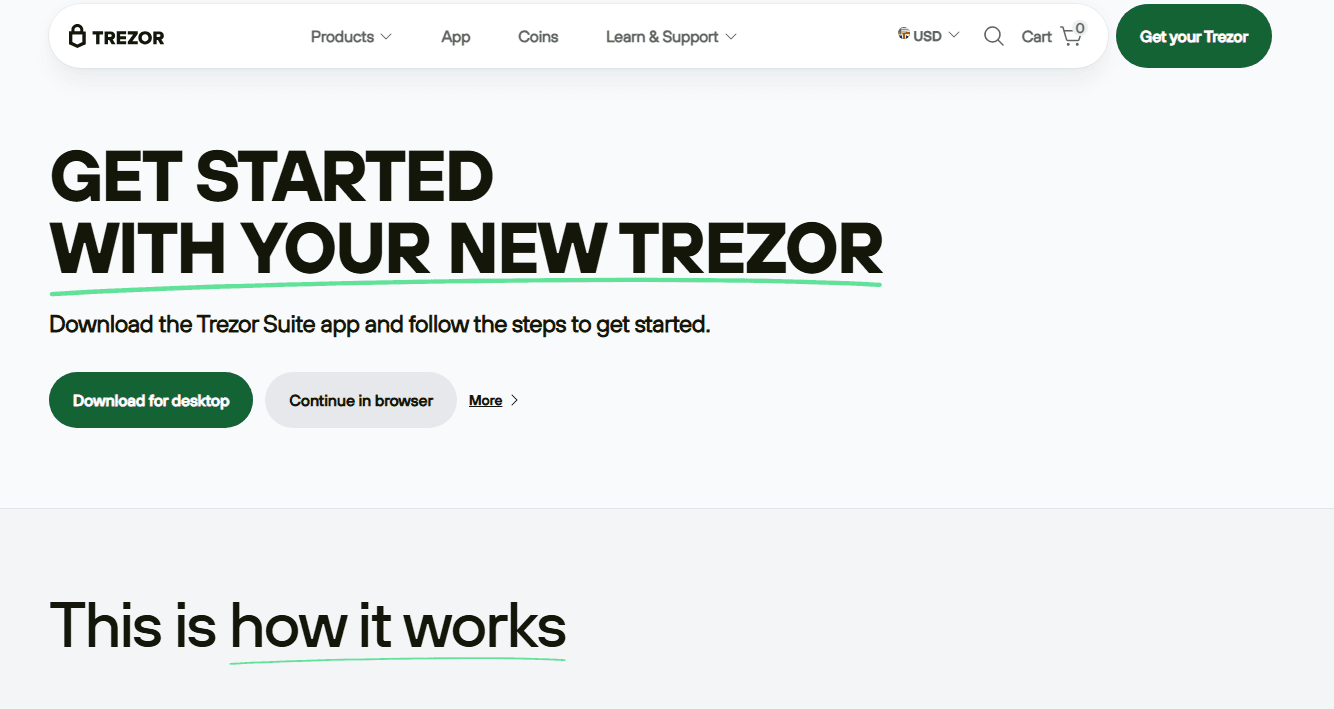
Trezor.io/Start: A Complete Guide to Setting Up Your Trezor Hardware Wallet
Trezor.io/start is the official starting point for setting up a Trezor hardware wallet. It is designed to guide users through every step of device initialization, recovery seed management, and secure cryptocurrency handling. For both beginners and experienced users, Trezor.io/start ensures that the setup process is safe, clear, and reliable.
This guide explains what Trezor.io/start is, why it is essential, how the setup process works, and the long-term security practices users should follow to maintain control of their digital assets.
What Is Trezor.io/Start?
Trezor.io/start serves as the official onboarding platform for Trezor hardware wallets. Its primary goal is to help users initialize their devices securely and understand the principles of self-custody. Unlike software wallets or exchange wallets, Trezor devices keep private keys offline, providing a higher level of security.
By starting with Trezor.io/start, users ensure they follow verified instructions and avoid mistakes that could compromise their funds. The platform guides users step by step, from powering on the device to managing cryptocurrency accounts safely.
Why Proper Setup Is Critical
Even though Trezor hardware wallets are highly secure, improper setup can put funds at risk. Common mistakes include selecting weak PIN codes, failing to store the recovery seed properly, or using unofficial instructions.
Trezor.io/start reduces these risks by providing a structured setup process. It ensures that private keys are generated on the device, that recovery seeds are handled safely, and that users understand how to protect their assets from potential threats.
Understanding Self-Custody
One of the key concepts introduced during setup is self-custody. With self-custody, users have full control over their private keys and digital assets. Unlike exchange wallets, no third party can access your funds or restore them if credentials are lost.
Trezor.io/start emphasizes that self-custody offers complete control and privacy, but also requires responsibility. Losing access to the recovery seed or the device could result in permanent loss of funds. Users are encouraged to understand their role as the sole custodian of their assets.
How Trezor Hardware Wallets Protect Your Assets
Trezor hardware wallets store private keys offline in a secure environment. Transactions are signed directly on the device, preventing sensitive data from ever leaving it. This design protects users from malware, phishing, and unauthorized access on connected computers or mobile devices.
During setup, Trezor.io/start explains how the device operates, including its secure elements, button navigation, and integration with companion software. Understanding these functions is essential before using the wallet to store cryptocurrency.
Powering on the Device for the First Time
The first step in the setup process is powering on the Trezor device. Trezor.io/start provides guidance on connecting the device to a computer or mobile device and navigating the interface. Users select their preferred language and learn how to interact with the device buttons.
The setup process emphasizes reading and confirming on-screen messages carefully. Following instructions step by step reduces the risk of errors and establishes a secure foundation for the wallet.
Creating a Strong PIN Code
Creating a secure PIN code is one of the most critical steps in the setup process. The PIN protects the device in case it is lost or stolen.
Trezor.io/start instructs users to select a PIN that is difficult to guess and unrelated to personal information. The PIN is entered directly on the device, ensuring that it remains secure and is not exposed to connected computers or mobile devices.
Generating the Recovery Seed
After setting the PIN, the Trezor device generates a recovery seed. This sequence of words serves as a complete backup of the wallet. The recovery seed is the only way to restore access to funds if the device is lost, damaged, or reset.
Trezor.io/start provides clear instructions on how to record the recovery seed offline. Users are strongly advised never to store it digitally, as online storage increases the risk of theft or hacking.
Safely Recording the Recovery Seed
Users are instructed to write down the recovery seed on paper and store it securely in a safe, offline location. Cloud storage, screenshots, or digital files are discouraged because they can be compromised.
Trezor.io/start stresses that anyone with access to the recovery seed can control the wallet. Proper handling and storage of this information are essential for long-term security.
Verifying the Recovery Seed
Once the recovery seed is written down, users are asked to verify it on the device. This step involves confirming specific words in the correct order.
Verification ensures that the recovery seed has been recorded accurately and prevents future recovery problems. It also reinforces the importance of careful attention during setup.
Installing Trezor Suite
Trezor Suite is the companion application for managing cryptocurrency accounts linked to the Trezor device. It allows users to view balances, organize multiple accounts, and prepare transactions securely.
Trezor.io/start guides users through downloading and installing Trezor Suite. The software communicates with the hardware wallet but never stores private keys, ensuring that all sensitive operations are securely handled on the device.
Connecting the Device to Trezor Suite
After installation, users connect the Trezor device to Trezor Suite and unlock it using the PIN code. The application then synchronizes with the hardware wallet, allowing users to view balances, transaction history, and account details.
Trezor.io/start emphasizes that private keys remain on the device at all times, providing maximum security while allowing convenient account management.
Authenticating the Device
Trezor.io/start includes steps to verify that the device is genuine. Device authentication ensures it has not been tampered with and meets the highest security standards.
Verifying authenticity gives users confidence that the wallet is safe to use and that transactions will be processed securely.
Adding Cryptocurrency Accounts
Once setup is complete, users can add accounts for multiple cryptocurrencies within Trezor Suite. Each account corresponds to private keys stored securely on the device.
Trezor.io/start explains how to organize accounts, track balances, and safely send or receive cryptocurrency. Users can manage multiple assets while maintaining complete control over their private keys.
Approving Transactions
Every transaction must be confirmed on the Trezor device itself. Trezor.io/start explains how transaction details are displayed on the device before signing.
Physical confirmation ensures that no unauthorized transactions can occur. It protects against malware, phishing attacks, and other online threats that could compromise funds.
Common Setup Mistakes to Avoid
Rushing through setup is one of the most common mistakes. Trezor.io/start encourages users to proceed carefully and confirm each step.
Another frequent error is mishandling the recovery seed. Storing it digitally or sharing it with others can result in permanent loss of funds. Users are reminded to take the recovery seed seriously and protect it at all times.
Long-Term Security Practices
Trezor.io/start introduces habits for long-term security. Users are encouraged to store the device in a secure location, update firmware regularly, and remain vigilant against phishing attempts or scams.
The device screen should be the only trusted interface for transaction confirmation, and sensitive information should never be entered into untrusted applications or devices.
Physical Device Care
Physical care is just as important as digital security. Trezor.io/start provides guidance on protecting the device from damage and preventing unauthorized access.
Proper handling ensures that the device functions reliably and continues to safeguard cryptocurrency assets over the long term.
Who Should Use Trezor.io/Start
Trezor.io/start is suitable for anyone setting up a Trezor hardware wallet. Beginners benefit from step-by-step guidance, while experienced users can confirm proper configuration and security practices.
Following the official starting point ensures a strong foundation for cryptocurrency management and builds confidence in self-custody.
Conclusion
Trezor.io/start is the essential first step for anyone using a Trezor hardware wallet. It guides users through device initialization, PIN creation, recovery seed handling, software installation, and long-term security practices.
By carefully following the trezor.io/start process, users gain complete control over their cryptocurrency while minimizing risks. The combination of hardware-based security, verified instructions, and responsible management ensures safe and confident handling of digital assets for both beginners and advanced users.